Last updated:
What a battery does
Solar panels make most of their power in the middle of the day, when many homes are empty. Without a battery, whatever the house doesn’t use at that moment goes to the grid. A battery stores that surplus and releases it in the evening, when the kettle, oven and TV are on and you would otherwise be buying electricity at the East Midlands price cap of 25.36p per kWh (Ofgem).
It can also charge from the grid overnight on a cheaper time-of-use tariff, then run the house through the expensive part of the day. In winter a Derby roof makes far less: PVGIS gives about 34 kWh per kWp in December against 121 in July, so overnight charging does more of the work then.
Sizing it properly
The right size depends on how much you use after the sun goes down, not on the size of your roof. A battery much larger than your evening use sits partly empty for most of the year. We size it from a year of bills or your smart meter data, and we will tell you if a smaller battery makes more sense.
Adding a battery to panels you already have
If you have panels from the Feed-in Tariff years and no battery, adding one is usually straightforward. There are two routes.
A hybrid inverter replaces your existing inverter and runs both the panels and the battery. This makes sense if your inverter is old or already failing, since the Energy Saving Trust expects inverters to need replacing after about 12 years (Energy Saving Trust).
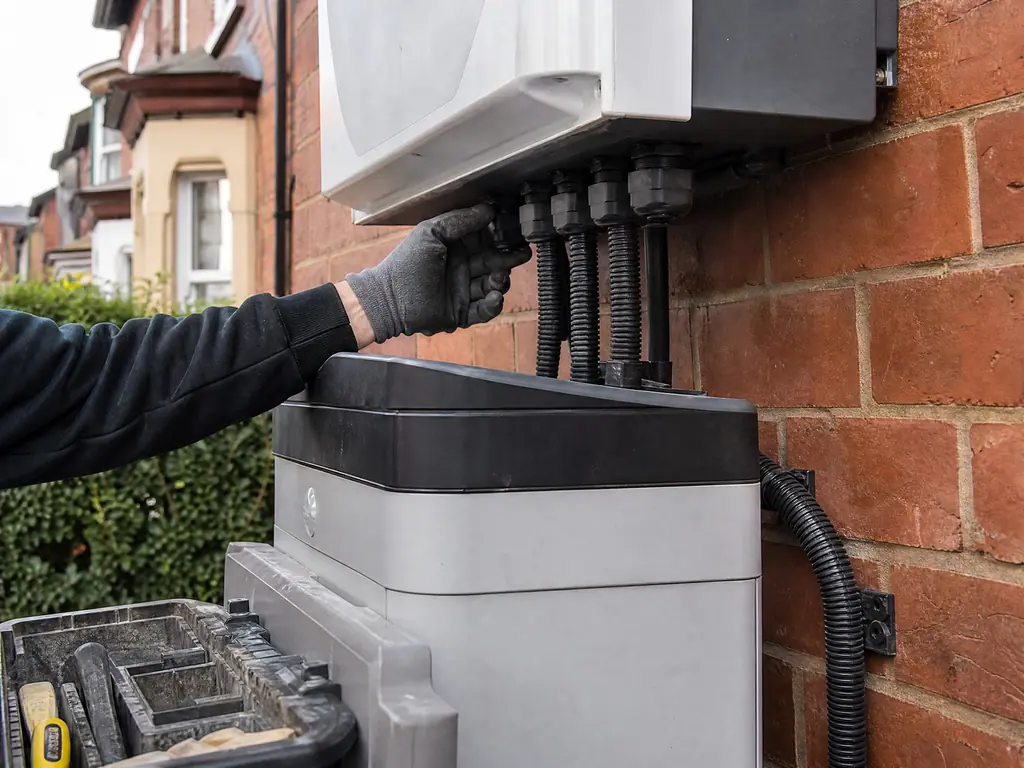
A separate battery inverter sits alongside your existing inverter and leaves the original system untouched. This is often the simpler choice when the current inverter is working well.
Ofgem allows equipment on a Feed-in Tariff system to be repaired or replaced as long as the installation still meets the scheme rules, and most home owners only need to tell their FIT licensee about the change (Ofgem). We check the arrangement for your system before anything is changed.
Cost and VAT
Checkatrade lists battery storage in Derby at £4,317 to £7,434, averaging £5,640 (Checkatrade). HMRC applies 0% VAT to batteries installed in homes until 31 March 2027, including a battery added to an existing solar system (HMRC VAT Notice 708/6). If you are also thinking about panels, fitting both together shares the scaffold, survey and electrical work. How much do solar panels cost in Derby? sets out the combined figures.
What's included
- A look at a year of your electricity use, or your smart meter data if you have it
- A check of your existing inverter, meter and consumer unit
- A recommendation on battery size, based on what you use in the evening
- A choice between a hybrid inverter or a separate battery inverter where panels already exist
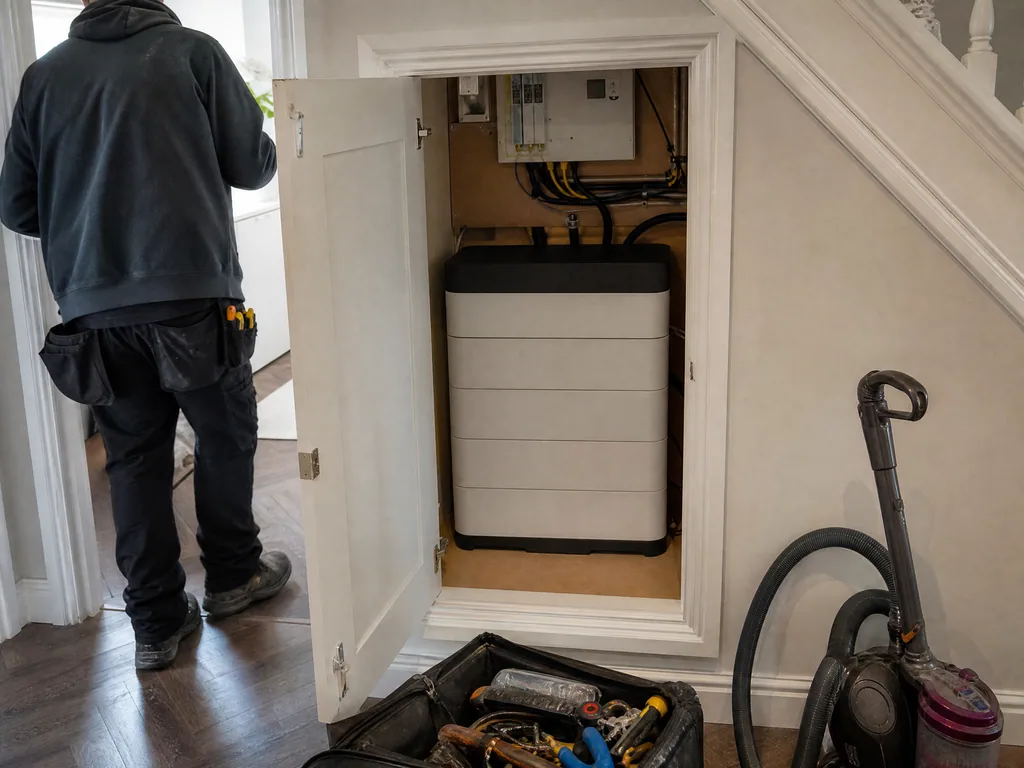
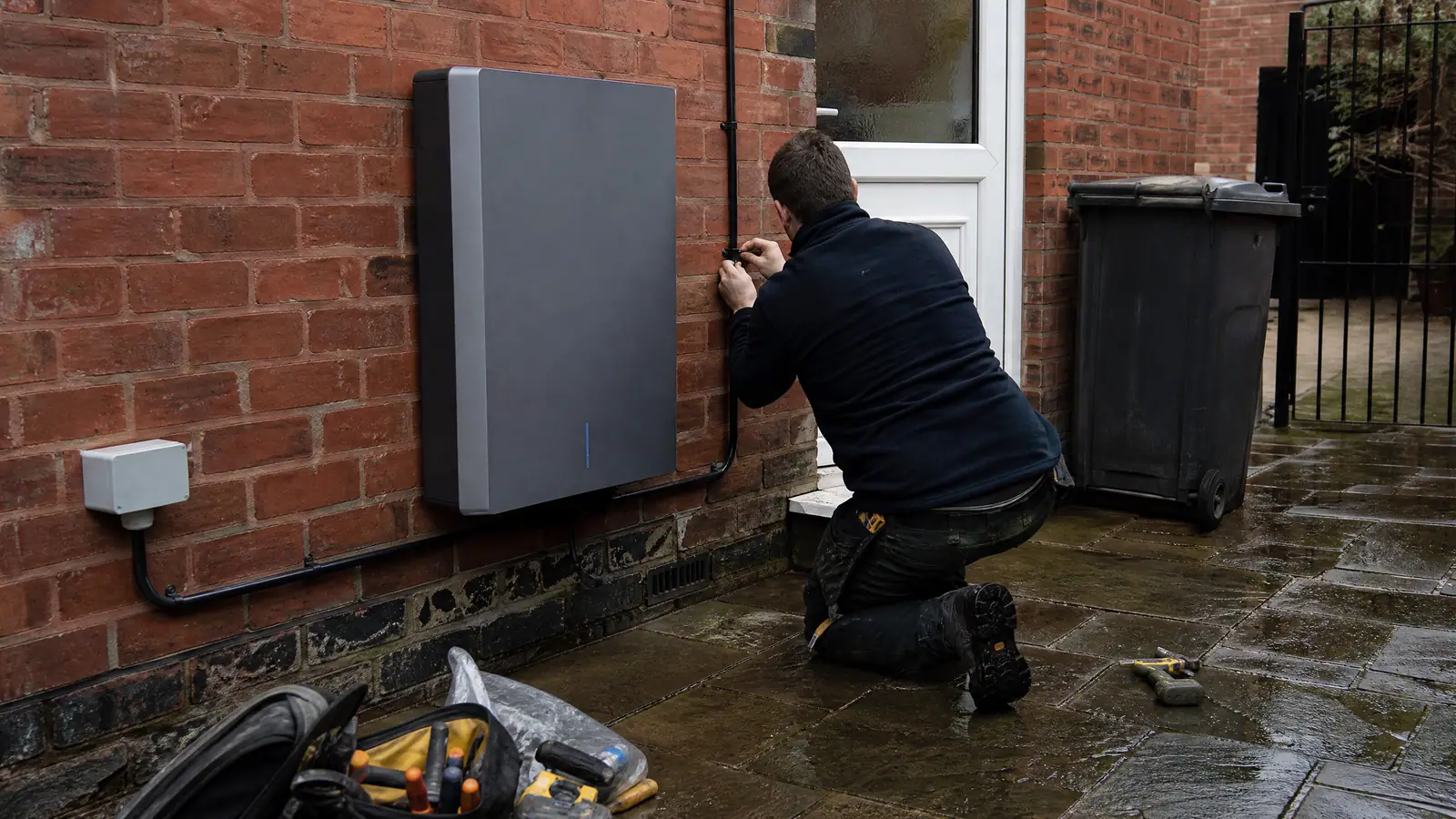
- Installation in a garage, utility room or outside wall where the maker allows
- Set-up of the battery app and charging schedule
- Notification or approval with the network operator
- A written quote with 0% VAT on a home install before any order is placed
How the options compare
Evening electricity
- No battery
- Bought from the grid
- Largest battery offered
- Covered, with capacity left unused
- Sized to your use
- Covered for a typical evening
Daytime surplus
- No battery
- Exported for a few pence
- Largest battery offered
- Stored
- Sized to your use
- Stored
Upfront cost
- No battery
- None
- Largest battery offered
- Highest
- Sized to your use
- Matched to the saving
Cheap overnight tariffs
- No battery
- Not usable
- Largest battery offered
- Usable
- Sized to your use
- Usable, set up for you