Last updated:
Start with the numbers
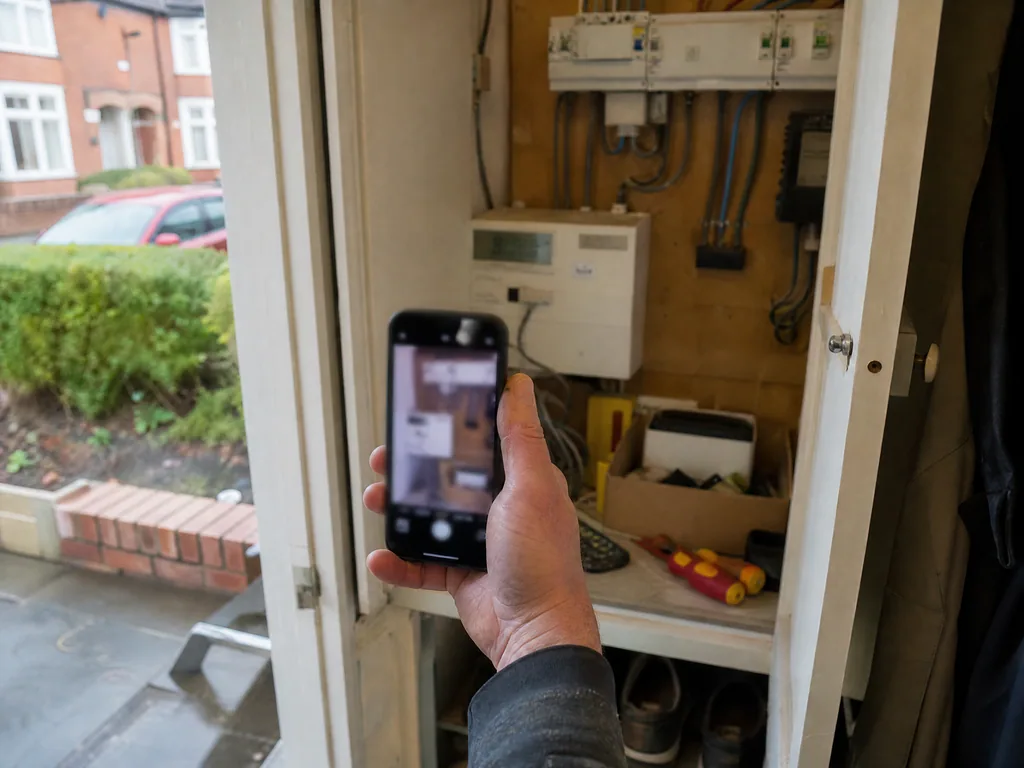
The quickest way to tell whether a system is healthy is to compare what it has made with what it should make. PVGIS, the European Commission’s solar model, gives a south-facing roof in central Derby about 979 kWh per kWp a year, and an east or west-facing roof about 773 kWh (PVGIS). Take the reading on your generation meter a year apart, divide by your system size in kWp, and you have a figure to compare.
Shade, pitch and panel age all move the real figure, so a small shortfall isn’t necessarily a fault. A large one, or a sudden drop from one year to the next, usually is.
What the health check covers
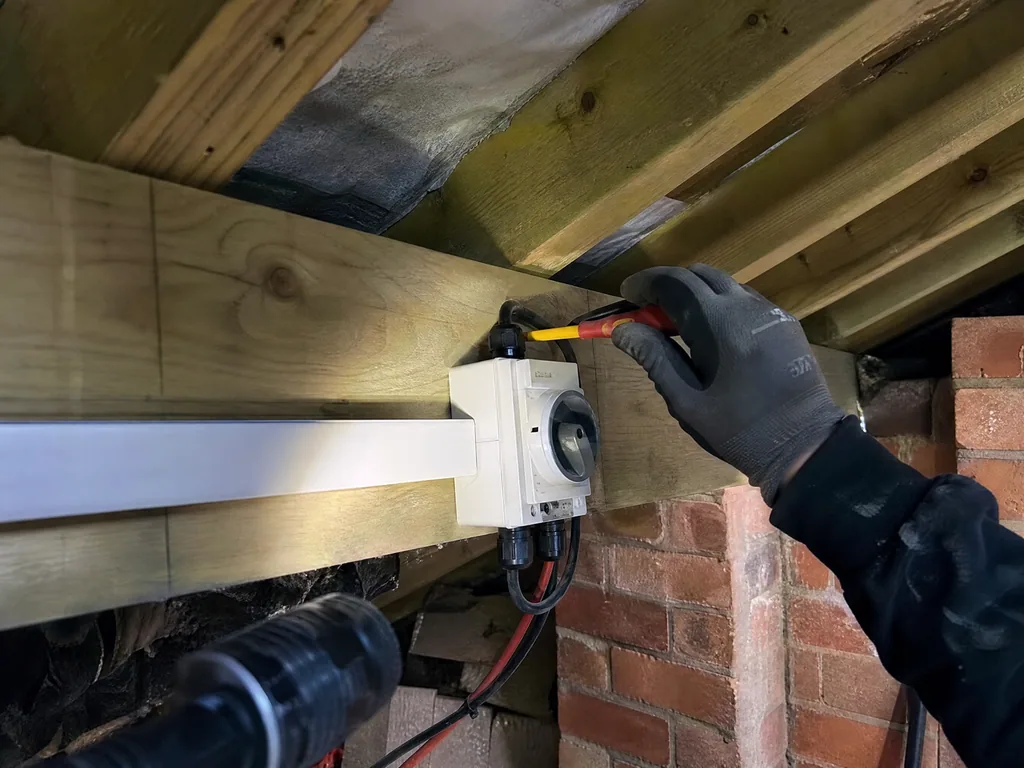
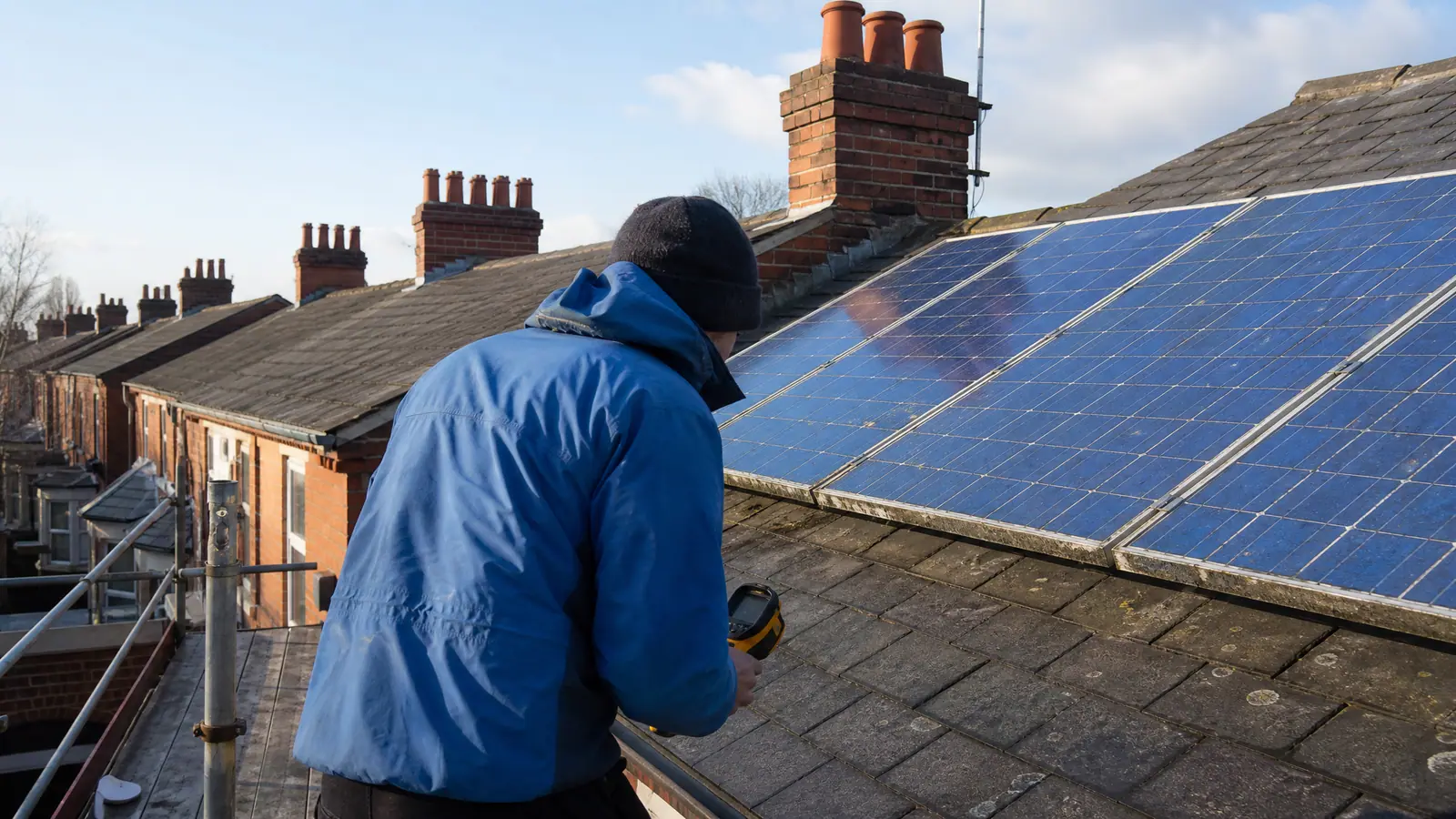
We check the inverter first, because it is the part most likely to fail. The Energy Saving Trust expects inverters to need replacing after about 12 years, while panels last 25 years or more (Energy Saving Trust). Then we test the isolators, look at the panels for cracks, scorch marks and dirt, and check the fixings and cabling we can reach safely.
If we find a fault, the health check tells you what it is. The repair itself is priced separately, in writing, before any work. Solar panel repair covers inverter replacements and other fixes.
Cleaning and birds
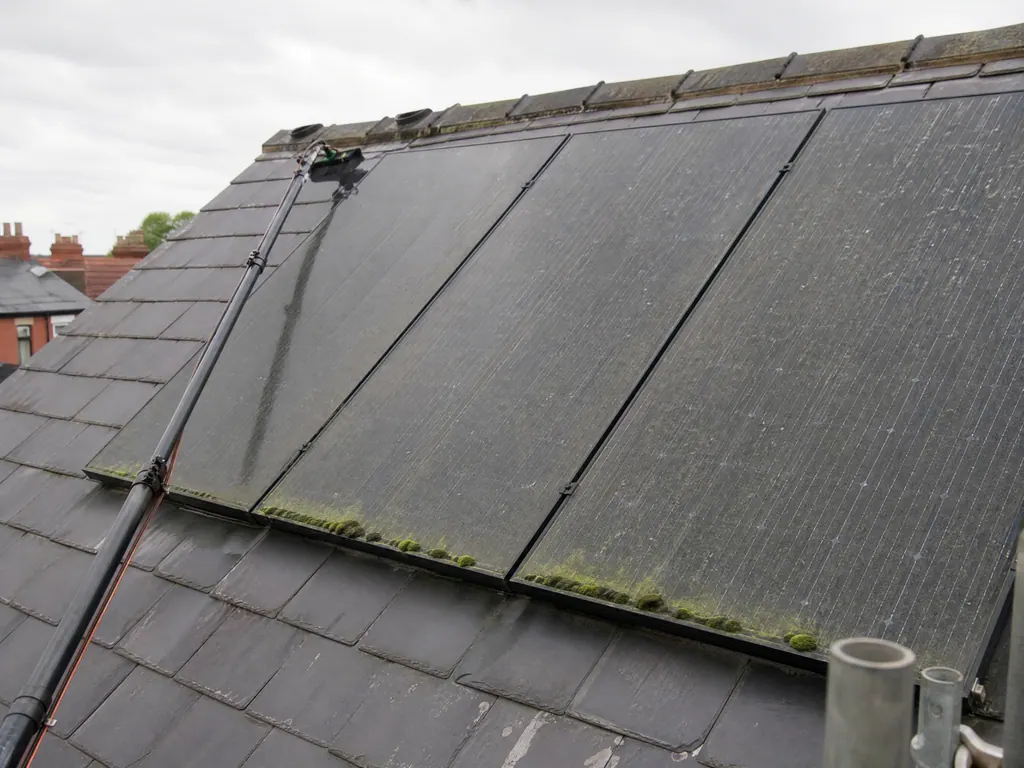
In the UK, rain keeps panels reasonably clean if they are tilted at 15 degrees or more, according to the Energy Saving Trust (Energy Saving Trust). Flatter panels, heavy bird droppings and moss are the exceptions, and solar panel cleaning deals with those. If the check shows pigeons nesting under the array, bird proofing stops them getting back in once any nest is no longer in use.
What's included
- Your generation meter or app history compared with the expected output for your roof
- Inverter readings, fault history and firmware where the model allows
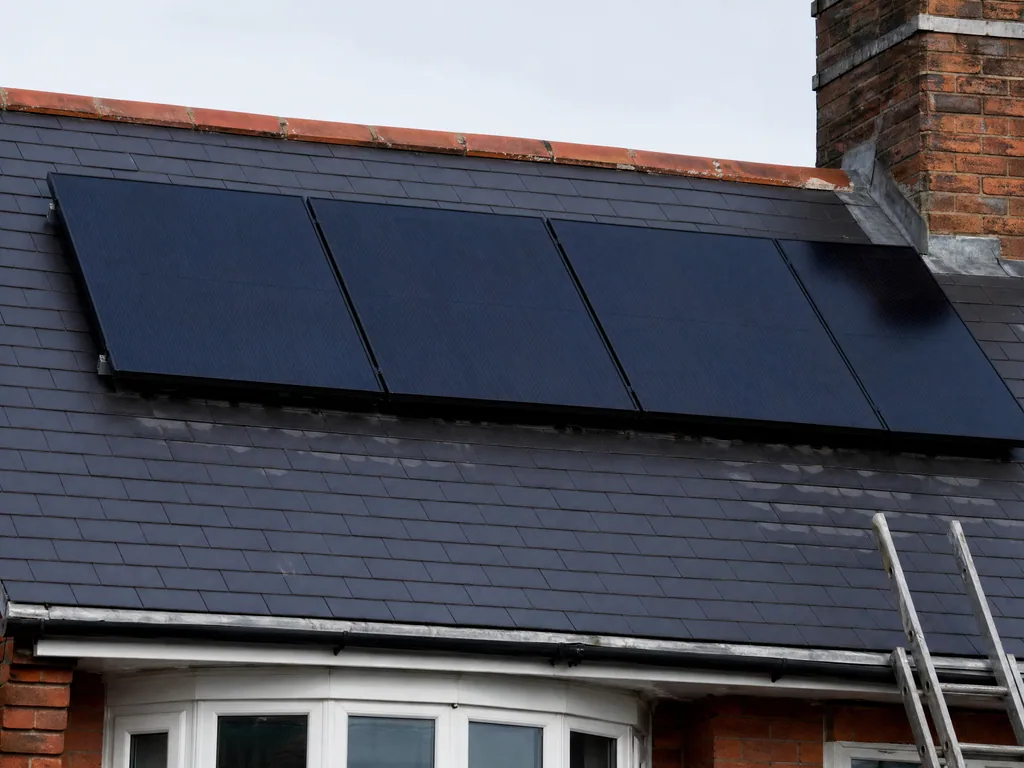
- Visual check of panels for cracks, hot spots, dirt and shading
- DC and AC isolators tested
- Connectors and cable runs checked where accessible
- Mounting rails and fixings checked from the roof or scaffold where safe
- Signs of birds or debris under the array noted
- A written summary with any recommended work priced separately
How the options compare
Is it making what it should?
- Never checked
- Unknown
- Quick look at the inverter
- Only if the screen shows an error
- Full health check
- Compared with PVGIS figures for Derby
Hidden faults
- Never checked
- Found when it stops
- Quick look at the inverter
- Often missed
- Full health check
- Tested for
Birds and debris
- Never checked
- Found when they cause a fault
- Quick look at the inverter
- Not checked
- Full health check
- Checked
Records
- Never checked
- None
- Quick look at the inverter
- None
- Full health check
- Written summary for your files